Chile to Bolivia Border Crossing for the Uyuni Salt Flat Tour
See prices From 70 EUR · Free cancellation available
Contents
The chile bolivia border crossing uyuni tour route uses a real international border post, not a formality tucked into the middle of a scenic drive, and I think that is worth saying plainly before you go. It sits at high altitude, it is staffed by immigration officers from both countries, and what you are allowed to bring across and how long you can stay depends on your passport, not on the tour operator running your trip.
I will cover what the crossing itself is like, what you actually need to bring, and why I would never trust a blog post, including this one, over your own government’s current travel advisory for anything involving visas. If you have not yet decided whether this whole trip is worth it, my Uyuni tour pillar guide is the better starting point before you get into crossing logistics.
What Does the Border Post Itself Look Like?
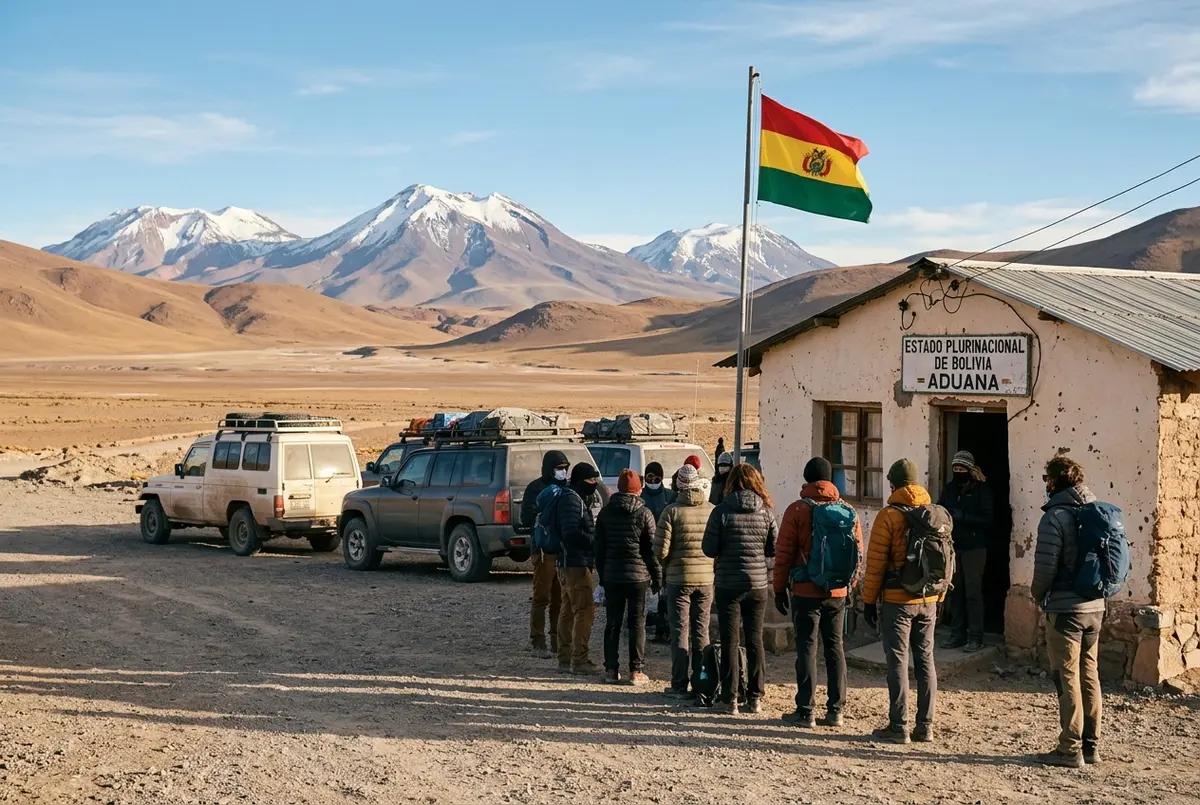
Small, remote, and basic, not a large terminal with multiple counters and long queues. Most crossings on this route happen at a modest building near the border line, where an officer checks passports, stamps you out of Chile and into Bolivia, and the whole process usually takes a matter of minutes per person unless several vehicles arrive at once.
My honest take: do not expect anything close to an airport style crossing. It is a functional, no frills immigration post in a genuinely remote, high altitude setting, and I think that is part of what makes the whole experience feel real rather than touristy. Bring patience rather than expectations of speed, since a slow morning with multiple tour vehicles arriving together is common, and there is usually nowhere nearby to wait in comfort beyond your own vehicle.
Facilities at the post itself tend to be minimal, so I would use a restroom back in San Pedro de Atacama or at an earlier stop if one is available, rather than counting on finding one right at the border. The setting is bare, windswept, and often cold even midmorning, which is part of why I would already be dressed for the altitude by the time your vehicle pulls up to the building.
Check prices & dates
Ready to visit?
Book your tickets in advance: popular time slots sell out.
Do You Need a Visa to Cross from Chile into Bolivia?
It depends entirely on your nationality, and this is exactly the detail I will not guess at for you. Some passport holders can cross with just a valid passport and no advance visa, while others need to arrange a visa ahead of time, sometimes with specific paperwork or a fee paid in cash in US dollars at the border itself.
I would check your own country’s current entry requirements for Bolivia directly through your embassy or Bolivia’s own immigration authority well before your trip, not through a tour operator’s secondhand summary or an old forum post. Visa rules change, and getting this wrong at a remote border post with no easy way to turn back is a genuinely bad way to start a 3-day trip. Wikipedia’s overview of Bolivia’s visa policy is a reasonable starting point for which bracket your passport falls into, though I would still confirm the specifics on an official government source before you travel.
How Long Does Your Passport Need to Be Valid?
Longer than you might assume for a short trip. Many countries require a passport to have a minimum number of months of validity remaining beyond your planned exit date, a rule that trips up more travelers than visa requirements do, since it applies broadly and people tend to only check it right before a flight, not before an overland border crossing.
My honest advice: check your passport’s expiration date against Bolivia’s current entry requirements as part of planning this specific trip, not just your main international flight. I would rather you catch this gap while you are still in San Pedro de Atacama with options than at the border itself.
What Should You Bring to the Border Crossing?
Your passport, any required visa documentation, cash in US dollars for a visa fee if your nationality needs one, and warm layers, since you will likely be standing outside at altitude while the group clears immigration. A printed copy of your travel insurance and a secondary form of ID are also worth having, even if they are rarely asked for.
I would keep all of this in a small daypack you carry yourself rather than buried in a duffel bag strapped to the roof of the vehicle. The border crossing specifically rewards having your documents easy to reach, more than almost any other single moment on the trip.
Is the Crossing Itself Safe?
Yes, in the ordinary sense that it is a staffed, official government border post rather than an informal or risky crossing point. The altitude and remoteness are the bigger practical factors here, not personal safety, since you are moving between two countries’ official immigration systems with your tour operator present throughout.
My honest take: I would worry less about the crossing itself and more about altitude and cold, since those are the factors that actually affect most travelers on this specific leg of the trip. A functioning immigration post at a remote location is still a functioning immigration post, and treating it with the same seriousness as any other international border, documents ready and expectations realistic, is really all it takes.
What Happens If Your Documents Are Not in Order?
You may be denied entry into Bolivia, which on this specific route can mean being turned back without completing the trip you have already paid for. This is exactly why I keep repeating the same point: verify your own requirements independently rather than assuming a tour operator has already checked for you.
I would treat this as entirely your own responsibility, not the operator’s. A tour company can get you to the border and back, but immigration decisions rest with the officer on duty that day, and no operator can override a genuine documentation problem on your behalf. If you are still weighing whether the whole trip is worth planning around in the first place, my honest Uyuni worth it breakdown is worth reading alongside this one.
Do You Need to Speak Spanish at the Border?
Not really, though a few basic phrases help the process feel smoother. Immigration officers at this crossing deal with international travelers constantly, and your guide is typically present through the process to help with anything that gets lost in translation.
My honest take: I would not worry about language as a barrier here. The bigger practical issue is usually having the right paperwork ready in your hand when it is your turn at the window, not the words you use to hand it over. A simple greeting and a thank you go a long way, but the officer’s job is to check your documents, not test your Spanish.
Does This Crossing Work the Same Way in Reverse?
Generally yes, since most travelers on this route continue onward from Uyuni rather than crossing back into Chile the same way they came. If your plans do involve returning to Chile afterward, the same passport and visa logic applies in the other direction, and I would confirm Chile’s own entry rules for your nationality just as carefully as Bolivia’s.
My honest advice: do not assume reciprocity rules are symmetrical between the two countries just because the crossing point is the same physical location. Check both directions independently if there is any chance you will be crossing back, and build a buffer day into your wider Atacama itinerary around this trip rather than scheduling a tight connection on either side of the border.
My Honest Recommendation
Check your own government’s current travel advisory for Bolivia, and separately confirm your passport’s remaining validity, at least a few weeks before this trip rather than the night before. I would rather you spend twenty minutes on an official source now than discover a problem at a remote border post with no easy way to fix it. Once your documents are sorted, every single-day Atacama tour on this site is still worth comparing against this multi-day trip before you commit your days to either one.
Frequently Asked Questions
Do all nationalities need a visa to cross from Chile into Bolivia?
No. Requirements vary by passport, so check your own government’s current travel advisory or Bolivia’s immigration authority directly rather than assuming.
Can I pay a Bolivian visa fee in local currency?
Typically it needs to be paid in US dollars cash at the border, though exact requirements can change, so confirm current rules before you travel.
How long does the border crossing itself take?
Usually a matter of minutes per person, though a busy morning with several tour vehicles arriving together can slow things down.
What if my passport is close to expiring?
Check it against Bolivia’s minimum validity requirement well before your trip. This is a common, avoidable reason travelers get turned back.
Is the border crossing dangerous?
No, it is a staffed official immigration post. Altitude and cold are the bigger practical factors to prepare for, not personal safety.