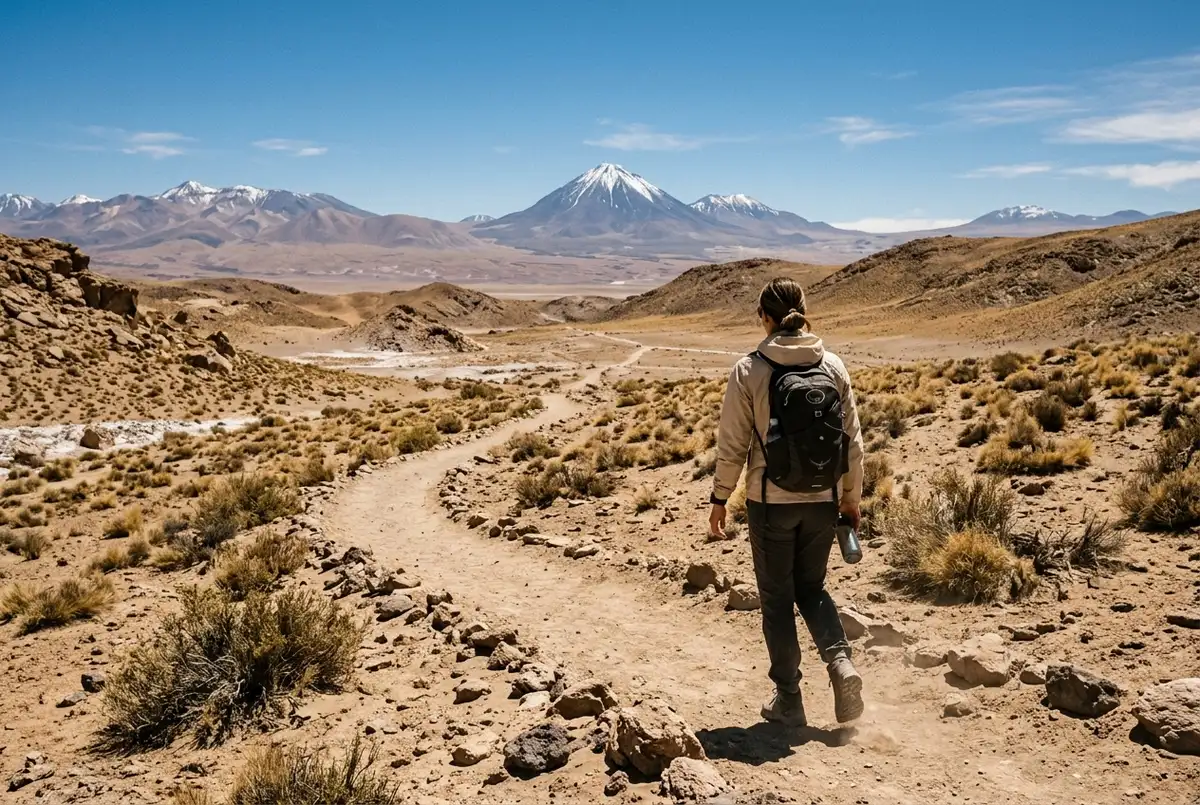
The best time to visit Atacama Desert destinations like San Pedro de Atacama is less about picking one perfect month and more about understanding a climate that swings hard between hot days and freezing nights, with a short rainy window that can complicate the higher-altitude excursions. Any month works reasonably well here, but a few genuinely suit most travelers better than others.
I will walk through what the daytime and nighttime temperatures actually feel like, when the brief rainy season shows up and what it affects, and how I would personally plan around both. This is distinct from the timing question stargazers specifically care about, since moon phase, not season, drives that decision. If you are still deciding whether this desert belongs on your itinerary at all, my guide to whether the Atacama Desert is worth visiting is worth reading first.
What’s the Weather Like During the Day?
Hot and dry, with strong sun at altitude that burns faster than the temperature alone suggests. Atacama desert weather by season does not swing as dramatically during daylight hours as you might expect, since the desert’s dryness holds fairly steady across the calendar, with daytime highs commonly reaching into the warm range even in the Southern Hemisphere winter.
My honest take: do not assume winter here means a cold day the way it would at home. The sun at this altitude is intense regardless of the month, and I would apply sunscreen the same way in July as I would in January.
How Cold Does It Get at Night?
Noticeably cold, often dropping near or below freezing once the sun goes down, since the dry desert air loses heat fast after dark. This nighttime drop happens year round, not just in winter, which genuinely surprises first-time visitors who pack only for the hot afternoon they experienced on arrival.
I would never judge the evening temperature by how the day felt. My honest advice: pack real layers for after dark regardless of which month you are visiting, since this swing is one of the most consistent features of the climate here.
Is There a Rainy Season in the Atacama Desert?
A brief one, known as the altiplanic winter, typically running from around January through March in the Southern Hemisphere summer. Rain mostly affects the higher altiplano rather than San Pedro de Atacama’s town center, but it can occasionally disrupt roads leading to El Tatio or the altiplanic lagoons.
My honest take: I would not avoid this window entirely, since most days even during this period stay dry, but I would check current road conditions with your operator before booking a high-altitude excursion if your trip falls in this stretch.
Does the Season Affect Which Tours You Can Book?
Slightly, mainly for the highest-altitude excursions during the brief rainy window, rather than for lower-altitude tours like Valle de la Luna or the stargazing sessions, which run reliably across the entire year. Operators generally reschedule rather than cancel outright if a specific road becomes impassable.
I would not build an entire trip around avoiding a specific month purely because of this risk. When to visit San Pedro de Atacama depends far more on your own schedule than on this fairly narrow seasonal risk window.
Is Summer or Winter Better for a First Visit?
Both work well, honestly, and I would not let this decide your travel dates on its own. Southern Hemisphere summer, roughly December through February, brings the rainy season risk at higher altitude but otherwise warm, pleasant days. Winter, roughly June through August, brings colder nights and clearer, crisper air, with no rain risk at all.
My honest pick: if I had to choose purely for weather, I would lean toward the shoulder months, April through June or September through November, since you get the dry conditions of winter without its coldest nights, and you sidestep the rainy season entirely. Neither extreme is a dealbreaker on its own, though, so I would not reshuffle a trip already booked for a different month purely over this.
Does Peak Season Mean Bigger Crowds?
Yes, to some extent, particularly around the Southern Hemisphere summer holidays and major local breaks, when accommodation and popular tour slots, like a sunset Valle de la Luna departure, book up faster. Shoulder season months generally offer a calmer pace without the same booking pressure.
I would book your key excursions in advance regardless of season, but I would specifically prioritize early booking if your trip falls during a known peak travel period.
Should You Plan Around Stargazing Specifically?
Not for the season, no, since the desert’s dry air holds steady enough across the calendar that any clear night offers excellent viewing. What actually matters for stargazing is the moon phase on your specific dates, not the month or season itself.
My best time for stargazing guide goes deeper into moon-phase planning and known meteor shower windows, since that is a genuinely different timing question from the general seasonal weather covered here.
What Should You Pack for Whatever Season You Visit?
Layers that handle both a hot, sun-exposed day and a cold night, regardless of which month you are traveling in. This climate’s defining feature is the daily swing, not the seasonal one, so your packing list barely needs to change between a summer and a winter trip here.
My full Atacama desert packing guide covers the complete list in more depth, since getting this right matters more here than on a typical warm-weather trip.
Does the Altiplanic Winter Affect High-Altitude Tours?
It can, mainly through occasional road disruptions on routes leading to El Tatio or the altiplanic lagoons, both of which climb well above 4,000 meters where weather and altitude already combine to ask more of your body. If your trip falls in this window, I would build in a little schedule flexibility around these specific excursions.
My altitude sickness guide for San Pedro de Atacama covers what actually changes at that elevation, separate from the seasonal rain risk discussed here.
Does the Season Affect How Many Flamingos You See?
A little, since flamingo numbers at Chaxa Lagoon and other altiplanic wetlands shift naturally through the year rather than staying constant, and sightings are never guaranteed on any single visit regardless of season. This has more to do with the birds’ own feeding patterns than with the weather itself.
My honest take: I would not plan a whole trip around a specific flamingo-viewing window, since the salt-flat and lagoon landscape itself is worth the stop even on a quieter day for wildlife.
Should You Check the Forecast Before Each Day’s Excursion?
Yes, specifically for anything climbing to high altitude, since a clear forecast at San Pedro de Atacama’s own elevation does not guarantee the same conditions at 4,000 meters. Most operators monitor this themselves and will reschedule a departure if conditions genuinely warrant it, but I would still glance at the forecast yourself the night before.
I would treat this as a quick daily habit on this specific trip rather than a one-time check before you arrive. The highland weather here can shift faster than the town’s own conditions suggest.
My Honest Recommendation
There is no single best time to visit Atacama Desert travelers must hit exactly, since the dry, high-altitude climate stays workable almost year round. I would lean toward the shoulder months for the most comfortable balance of dry weather and manageable night cold, and I would simply check current road conditions with your operator if your trip falls during the brief January-to-March rainy window. Whichever season you land in, pack for both a hot day and a freezing night, since that daily swing matters more than the month on the calendar. Once your dates are set, it is worth lining up every San Pedro de Atacama excursion by season and duration to build the rest of your itinerary around them. Chile’s official meteorological service, Dirección Meteorológica de Chile, is a reasonable independent reference if you want current conditions closer to your actual travel dates.
Frequently Asked Questions
Is there a single best month to visit the Atacama Desert?
Not really. The shoulder months, April through June and September through November, offer the most comfortable balance, but any month works reasonably well.
Does it rain much in San Pedro de Atacama?
Rarely in town itself. A brief altiplanic rainy season, roughly January through March, mainly affects the higher altiplano rather than the town center.
How cold does it get at night in the Atacama Desert?
Often near or below freezing, year round, since the dry desert air loses heat fast after dark regardless of season.
Does the season affect stargazing quality?
Not much. Moon phase matters far more than season for stargazing, since the sky stays dry and clear across most of the calendar.
Should I avoid the rainy season entirely?
Not necessarily. Most days even during that window stay dry, though I would check road conditions before booking a high-altitude excursion if your trip falls then.